



24 October 2015
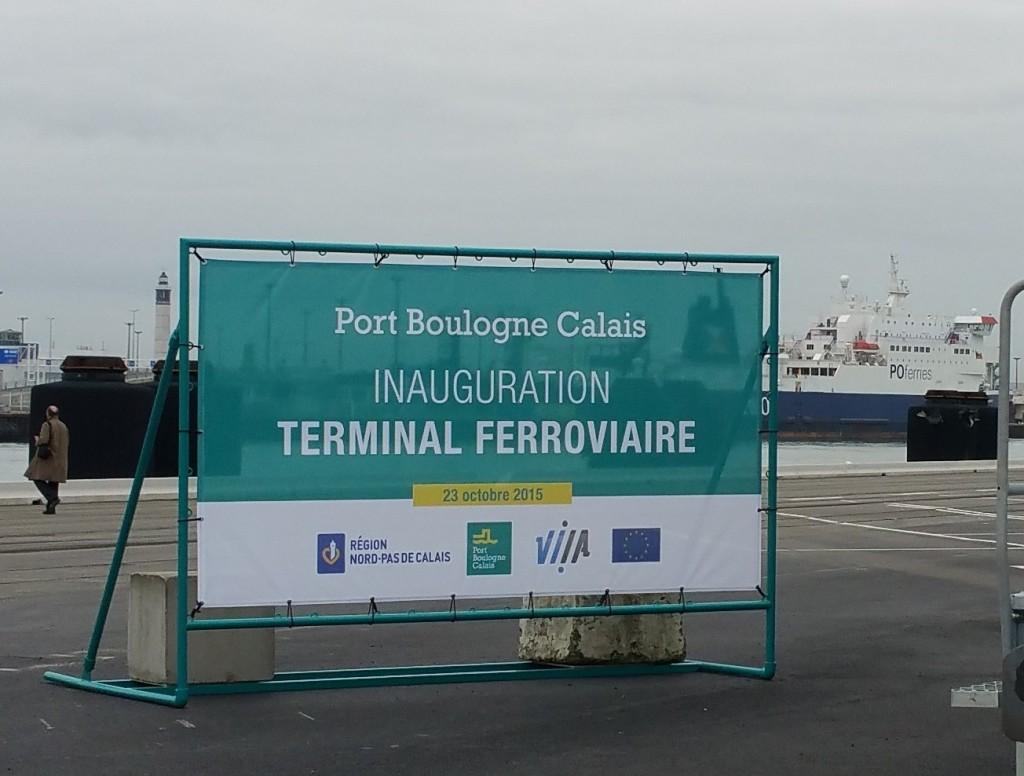 The rail superhighway terminal is the first stepping stone in Boulogne Calais Port’s strategy with a view to developing the transport of unaccompanied semi-trailers. The new VIIA Britanica line operated by VIIA will open as of January 2016, connecting the Port of Calais with Le Boulou, on the French-Spanish border.
Boulogne Calais Port, the Regional Council of Nord-Pas de Calais and VIIA, a subsidiary of SNCF Logistics, this morning inaugurated the new rail terminal in the Port of Calais. This rail terminal will allow the entry into service as of January 2016 of the Le Boulou – Port of Calais rail superhighway, officially initiated in September 2013 by Frédéric Cuvillier, French Minister of Transport at that time. The superhighway will connect Spain to the United Kingdom directly in unaccompanied cargo mode.
The first European port equipped with a latest-generation rail terminal
Co-financed by Boulogne Calais Port and the European Union via the BRIDGE1 programme backed by the Nord-Pas de Calais Region, the rail terminal required a capital investment of €7 million. This new facility increases the attractiveness of the port, the first in Europe to be provided with such a terminal.
The port site has been redesigned to receive the new platform and allow smoother travel on site. A new zone has also been created to receive trains from the eastern Pyrenees directly at the port. All the customary checks will be performed on all the semi-trailers unloaded from the trains before they are transferred to their end destination.
A new innovative trans-European transport service, adding to the VIIA network.
The new rail terminal has been especially designed to receive new-generation wagons. These new side-loading UIC wagons, built by French company Lohr Industrie, simplify and speed up loading and unloading operations, since the trailers are drawn directly onto the wagons and no longer hoisted by crane.
Thanks to this technology, all types of semi-trailer meeting European standards, reinforced or not, can be received, because it is no longer necessary to proceed by vertical loading. This innovative technology makes the new VIIA Britanica service accessible to all transport operators.
Installed for the first time in a port, this new terminal is a rail, sea and road modal interchange hub for unaccompanied semi-trailers travelling from Spain to the United Kingdom, or to northern France and Belgium.
A reduction in CO2 emissions of almost 50,000 tonnes per year
The new VIIA Britanica service between Le Boulou and the Port of Calais will be the longest rail superhighway in Europe (1,200 km of road travel avoided). 40,000 trailers will be able to be transferred from road to rail each year, which represents a reduction in road congestion (50 million truck-km avoided) and a reduction in CO2 emissions of almost 50,000 tonnes per year.
The opening of this terminal and the entry into service of VIIA Britanica on 12 January next represents a further stage in the construction of the VIIA network.
VIIA Britanica is the third rail superhighway line in France, added to the lines already existing between Bettembourg (Luxembourg) and Le Boulou, and between Aiton (near Chambéry) and Orbassano (near Turin).
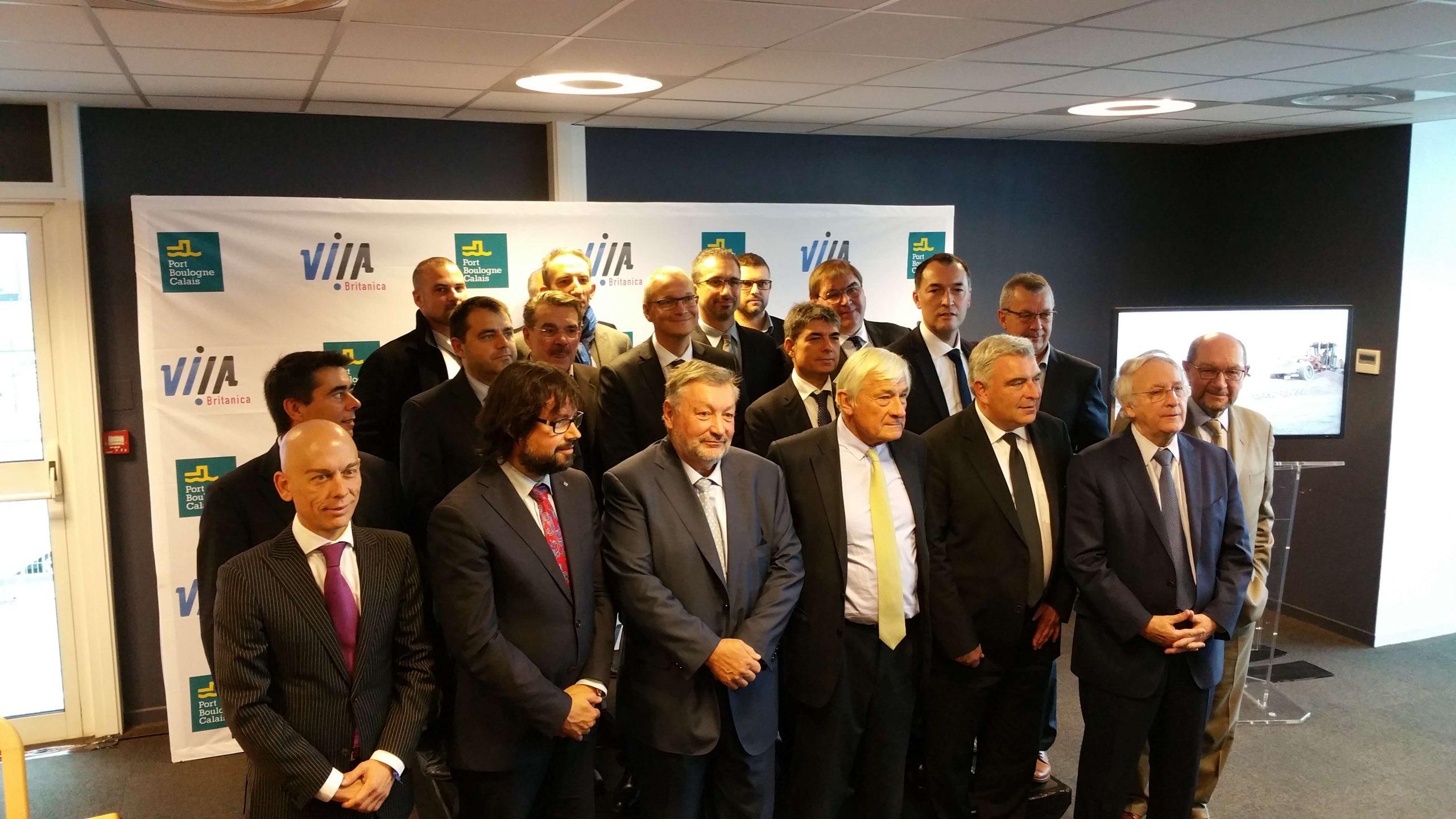 Jean-Marc Puissesseau, President of Boulogne Calais Port, said: “We are proud to be the first European port equipped with a terminal of this type. This investment opens up development prospects for the port and prefigures the port’s expected growth due to “Calais Port 2015“.
Thierry Le Guilloux, President of VIIA, said: “We are delighted by the opening of this terminal, which attests the vision that we share with Boulogne Calais Port, of expanding the cross-Channel traffic of semi-trailers in unaccompanied mode, by connecting rail superhighways and maritime superhighways.”
The European “BRIDGE” project (Building the Resilience of International and Dependant Gateways in Europe) aims to adapt port infrastructure to the growth in freight traffic (estimated at 40% by 2030 on the Calais-Dover sea link). The ports of Calais and Dover benefit from this via the partnership organised with the Nord-Pas de Calais Region.
