

IGFV: Financial support instrument for border management and visa policy
The European IGFV fund (Financial Support Instrument for Border Management and Visa Policy) finances, among other things, the management of the European Union’s external borders. It helps to ensure a high level of internal security within the Union while preserving the free movement of persons. The IGFV also contributes to a common and harmonised visa policy and introduces protective measures for vulnerable people arriving in Europe.
To this end, several European regulations have been adopted to establish new European information systems, including the Entry-Exit System (EES).
These regulations provide for the recording of data relating to the entry and exit of third-country nationals who cross the external borders of Member States.
The implementation of the entry-exit system means that each traveller concerned must:
• the creation of an individual file in a European database, containing biographical data (surname, first name(s), date of birth, place of birth), documentary data (passport number) and biometric data (facial photograph, fingerprints of the four fingers of the right hand);
• At each crossing, electronic stamping (which will replace manual passport stamping) of the file, evidenced by the creation of an entry record, an exit record, or an entry refusal record.
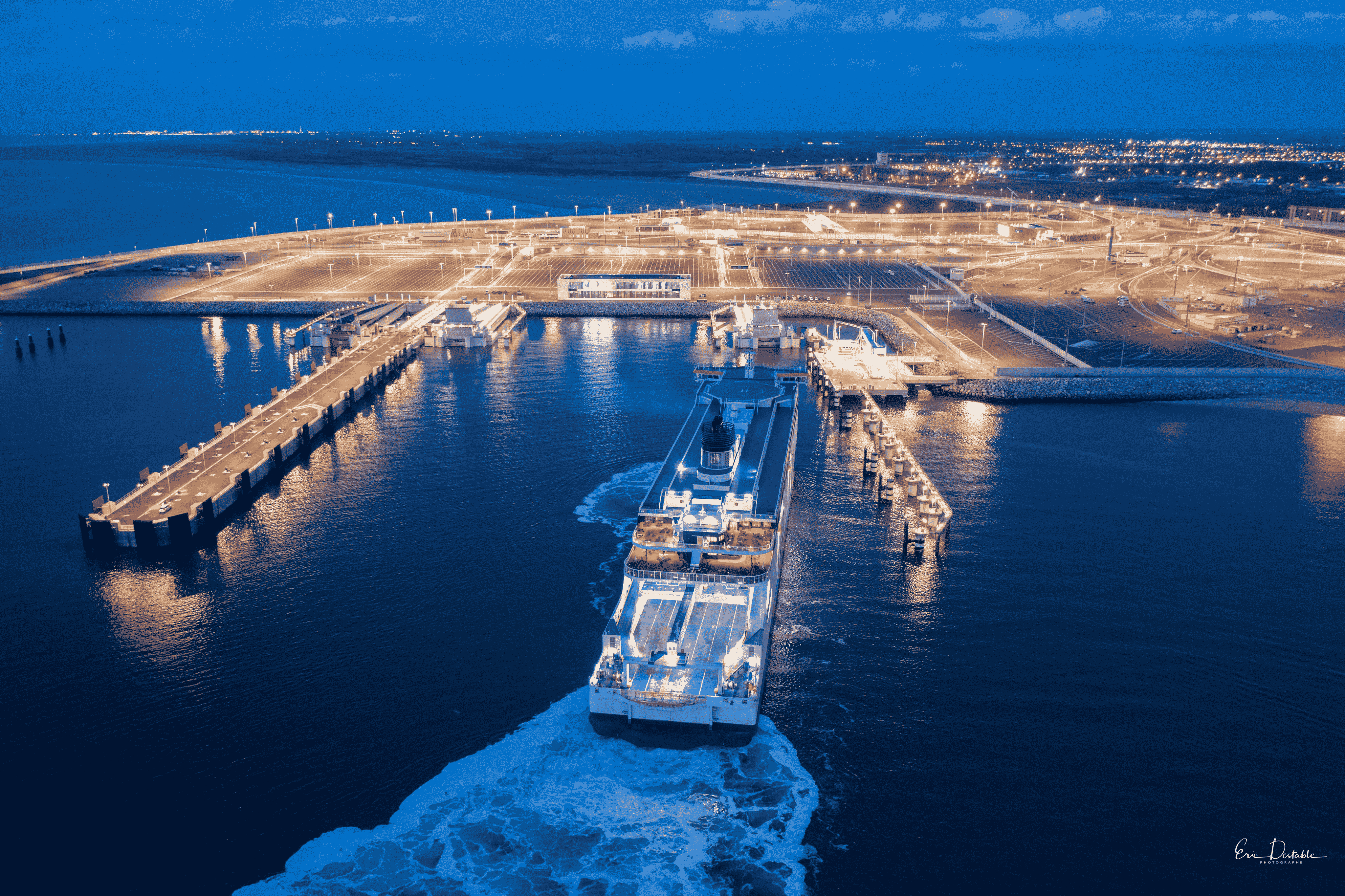
Due to the nature of its activity, which involves the exchange of passengers and goods between the European Union and the United Kingdom, a third country, the Port of Calais is a point of entry and exit from the Schengen area. Consequently, in order to adapt its infrastructure to the implementation of the EES system and the control of all travellers transiting through its facilities, the Port of Boulogne Calais has obtained European Union funding of €4,801,680 (total amount: €5,335,200) from the IGFV programme.
EMFF, European Maritime and Fisheries Fund 1/2
The European Maritime and Fisheries Fund (EMFF) provides financial support to the fisheries sector and coastal communities to help them adapt to change and stimulate their economic development while respecting the environment.
It operates within the framework of the common fisheries policy and the integrated maritime policy.
The Port of Boulogne Calais has obtained funding under Measure 62, “Implementation of local development strategies led by local actors,” of the European Maritime and Fisheries Fund (EMFF) for the period 2014-2020 for its port site in Boulogne-sur-Mer.
These funds enabled the co-financing of the construction of an enclosure dedicated to used fishing gear, equipped with big bags and pallet skips made available to boats, enabling the recovery of this waste to the tune of €9,753.20.
EMFF, European Maritime and Fisheries Fund 2/2
The European Maritime and Fisheries Fund (EMFF) provides financial support to the fisheries sector and coastal communities to help them adapt to change and stimulate their economic development while respecting the environment.
It operates within the framework of the common fisheries policy and the integrated maritime policy.
The Port of Boulogne Calais has obtained aid under Measure 43 “Fishing ports, landing sites, fish markets and shelters” of the European Maritime and Fisheries Fund (EMFF) for the period 2014-2020 for its port site in Boulogne-sur-Mer.
These funds enabled the co-financing of the new fish packaging washing centre to the tune of €300,000 (total investment in the new infrastructure: €3.4 million) and the construction of a drying yard for fishermen to the tune of €240,000 (total investment: €800,000).

